

It seems that everyone I’m speaking with lately is searching for the perfect candidate to fill leadership roles in their organizations. I call them five-tool players.
Those five tools are,
- Competence: High levels of both IQ and EQ (Emotional Intelligence).
- Communication: The ability to communicate effectively at all levels, up, down, and sideways.
- Team Building: Creating high-performing teams by putting people in the best positions to succeed.
- Developing Others: Growing key people through effective coaching and delegation.
- Strategic Thinking: Understanding all facets of the business and how they work together.
While effective leaders possess many other skills, these five tend to be highly sought after by organizations.
Here’s the challenge.
Very few people actually possess all five tools!
Those who do are probably already leading another organization and aren’t usually available to hire.
The reality is that many candidates will be highly proficient in one or two of these areas, with the potential to develop another. Which, by the way, can make them extremely valuable assets to your organization!
Recently, I was sharing this concept with one of my coaching clients who leads a nonprofit healthcare organization.
She offered an interesting perspective.
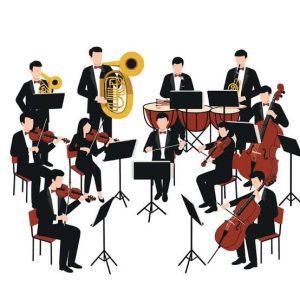
“I don’t need my leaders to know how to play every instrument in the orchestra. I just need them to be really good at playing one instrument and have a basic understanding of how all the instruments work together.”
That got me thinking.
A successful business really is a lot like a symphony orchestra.
Finding Your Place in the Orchestra
Think about someone just starting out in an orchestra. Initially, you’re seated toward the back, trying to read the sheet music, keep up with everyone else, and make as few mistakes as possible.
Sound familiar?
These are your new hires and frontline team members.
One-tool players.
Eventually, you become more comfortable with your instrument, develop your skills, and move up a few chairs. You’re now contributing at a much higher level. In your organization, these are often your supervisors and managers. They’ve demonstrated proficiency in their own roles and are beginning to coach, train, and develop others.
Two or maybe three-tool players.
Here’s where things get interesting. This is also where many people will spend most of their careers, and that’s not necessarily a bad thing! These individuals are extremely valuable to your organization. They’re the people who keep things running day in and day out. They know their jobs, understand the business, and consistently deliver results. Make sure their contributions are recognized and rewarded, or you may find yourself replacing them far more often than you’d like.
In fact, many of the experienced candidates available in today’s job market are these very people. They’ve developed two or three valuable tools but may not feel appreciated or have opportunities to grow with their current employers.
Moving Toward the Front of the Orchestra
As musicians continue developing their craft, some become so proficient that they begin influencing the performance of the entire orchestra. They’ve mastered their own instrument and developed a greater understanding of how the other instruments contribute to the overall performance.
In your organization, these are often your directors and senior leaders. They’ve developed another tool or two, and their ability to see beyond their own responsibilities makes them increasingly valuable. Their contributions are highly regarded because they understand that success isn’t simply about how well they perform individually.
It’s about how well everyone performs together.
Becoming the Conductor
Finally, we have the conductor. The conductor understands how every instrument contributes to the overall performance of the orchestra. Too much of one instrument or not enough of another can make the difference between a beautiful performance and a complete disaster. The conductor knows when to step in and provide direction and when to step back and allow the musicians to do what they do best.
Sounds a like effective leadership?
At this level, the air gets pretty thin. There’s no one else to blame when the performance doesn’t go as planned.There’s a reason we don’t have an abundance of truly great conductors, and it’s the same reason we don’t have an abundance of truly great leaders… It’s really hard!
It takes years of practice, dedication, and a willingness to continually develop your skills. Very few people are natural-born leaders. Most of us have to work at it. Even those with extraordinary natural talent will tell you they’ve worked incredibly hard to master their craft.
Your Quarter Turn
Here’s my challenge for you this week.
Take a look at your own leadership orchestra.
- Where are you asking someone to conduct the entire orchestra when they haven’t quite mastered their own instrument?
- What are the one or two essential skills you really need in the leadership positions you’re trying to fill?
- What’s one additional tool you could help yourself or one of your leaders develop to reach the next level?
Stop expecting everyone on your team to be the conductor!
Instead, help them master their own unique skills and talents, understand how they contribute to the overall performance, and then develop one more tool. Remember, a great orchestra doesn’t need everyone holding the baton. It needs talented people playing their instruments together to create something extraordinary.
Here’s to conducting your own leadership symphony.
One instrument and one Quarter Turn at a time!
Thoughts for the week:
The future belongs to those who learn more skills and combine them in creative ways- Robert Greene
Don’t wish for less problems, wish for more skills -Jim Rohn
Build your skills, not your resume -Sherly Sandberg
Recent Comments